

Quick Verdict
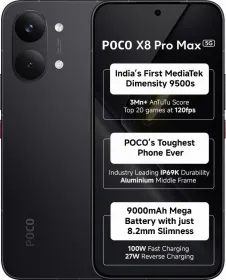
The POCO X8 Pro Max commits fully to performance and battery life. The Dimensity 9500s, strong thermals, and UFS 4.1 storage deliver good gaming performance, and the massive 9,000 mAh battery easily changes how often you need to charge.
The rest of the experience feels less refined though. Cameras are average, and HyperOS 3 still brings ads and bloat that take away from the overall polish. At around ₹40,000, it stands out for raw power and endurance, though it feels built for a very specific kind of user.
Buy it if:
- You want one of the best performance-focused phones with excellent thermals and long battery life.
- You mainly care about gaming and sustained performance over everything else.
Skip it if:
- You want a more polished experience with better cameras and cleaner software.
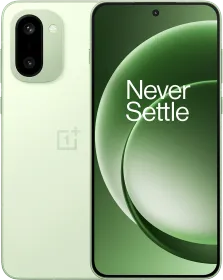
- You prefer a more balanced phone like the OnePlus Nord or realme GT 7.
The POCO X8 Pro Max is the most powerful device in POCO’s new X8 lineup, and it immediately feels like the company is shifting the role of the X series in India. Traditionally, POCO’s F series handled the performance-focused high-end segment while the X series sat slightly below it. With the X8 Pro Max, that line starts to blur a bit.

The phone comes with a new Dimensity flagship chipset, a much larger battery than what I normally don’t see in this segment, and a design that leans toward gaming aesthetics. The hardware is clearly designed for performance and endurance over everything else.
I’ve been using the White variant of the POCO X8 Pro Max for a short time now, and while it is still early, here are my first impressions of the device. Let’s dive in.
HOW I TESTED
| Test Unit: POCO provided the review unit of the POCO X8 Pro Max, though the company had no input in this review. Duration and Environment: I used the phone for over a week, and tested it on a Jio SIM in India. The unit ran HyperOS 3.0.1.0.WPLINXM with the February security patch during testing. Tests: I tested daily usage including calls, social media, streaming, and navigation, along with BGMI and Genshin Impact sessions to evaluate performance and thermals. Synthetic benchmarks such as AnTuTu, Geekbench 6, and 3DMark were also used, alongside camera testing in different lighting conditions and battery drain tracking on mixed usage. Competitors: OnePlus Nord 6 (upcoming), Nothing Phone (4a) Pro, and realme GT 7 |
POCO X8 Pro Max Price & Availability
The POCO X8 Pro Max starts at ₹42,999 for the 12 GB + 256 GB variant, while the 12 GB + 512 GB configuration costs ₹46,999.
POCO is also offering a ₹3,000 bank discount as part of the launch offers. Sales will begin March 23 at 12 PM on Flipkart.
ALSO READ: POCO X8 Pro and X8 Pro Max Launched in India with Large Batteries and Dimensity Chips
The phone is available in Black, White, and Blue, and the White model I have features a subtle pattern on the fiberglass back panel along with the RGB lighting around the camera module.
Pros
- Very strong performance with Dimensity 9500s
- Excellent thermals, barely heats up
- Massive 9,000 mAh battery
- Good display with HDR10+ support
- Solid stereo speakers
- Premium metal frame with unique design
- Full IP66, IP68, IP69, IP69K ratings
- Ultrasonic fingerprint scanner is fast
- 100W PPS support
- 27W reverse wired charging
Cons
- Camera hardware is average
- Portraits are often overexposed
- Ultra-wide is weak
- Camera struggles in low light
- HyperOS has ads and bloatware
POCO X8 Pro Max Specifications
- Display: 6.83-inch AMOLED (TCL M10), 2772 x 1280, 120 Hz adaptive, HDR10+, 2000 nits HBM, 3500 nits peak, 3840 Hz PWM
- Processor: MediaTek Dimensity 9500s (3 nm)
- RAM: 12 GB LPDDR5X Ultra (9.6 Gbps)
- Storage: 256 GB / 512 GB UFS 4.1
- Main Camera: 50 MP Light Fusion 600 1/2-inch, f/1.5, 26mm, OIS, AF, 4K60
- Ultra-wide: 8 MP SmartSens SC821 1/4-inch, f/2.2, 16mm, fixed focus, 1080p30
- Front Camera: 20 MP OmniVision OV20B 1/4-inch, f/2.2, 21mm, fixed focus, 1080p60
- Battery: 9,000 mAh silicon-carbon
- Charging: 100W wired (PPS), 27W reverse wired
- Cooling: 5800 mm² 3D IceLoop
- Speakers: Dual stereo (400% volume boost)
- Build: Metal frame, fiberglass back
- Protection: Gorilla Glass 7i, IP66/IP68/IP69/IP69K
- Connectivity: Wi-Fi 7, Bluetooth 6, NFC, IR blaster, eSIM
- Software: HyperOS 3 based on Android 16 (4 OS + 6 years security)
- Colors: Black, White, and Blue
POCO X8 Pro Max Review: Unboxing

The unboxing feels standard but complete. You get the POCO X8 Pro Max, a black protective case, a 100W fast charger, a USB-A to USB-C cable, a SIM ejector tool, and the usual paperwork. The pre-applied screen protector adds decent protection right away.
POCO X8 Pro Max Review: Design and Build

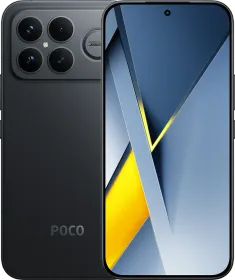
At first glance, the design clearly targets a performance and gaming audience. The back panel uses fiberglass instead of glass, paired with a metal frame, which helps keep the phone durable without making it feel cheap.
The phone measures around 8.2 mm in thickness and weighs about 220 grams, and it is also quite wide in hand. That width is noticeable during one-handed use, especially while reaching across the display.

The camera module has a racetrack-style layout with dynamic RGB lighting integrated around it. These lights respond to various triggers such as notifications, music playback, charging status, gaming activity, and camera timers. It adds some visual character to the phone without being overly flashy.

In terms of ports and layout, the bottom houses the SIM tray, primary microphone, USB 2.0 port, and speaker. Up top, there is the secondary microphone and speaker. The phone also includes an IR blaster. On the side, the power button and volume controls are placed together and are easy to reach.


The power button also has a red accent, which adds a small visual detail that fits the gaming-focused design.
Durability is another aspect worth mentioning. The phone carries IP66, IP68, IP69, and IP69K ratings, which means it is rated not only for dust and water immersion but also for high-pressure water jets. Overall, the POCO X8 Pro Max’s design and build does not disappoint.
POCO X8 Pro Max Review: Display

The X8 Pro Max uses a 6.83-inch AMOLED panel based on TCL’s M10 display technology, with a resolution of 2772 x 1280. The panel supports an adaptive refresh rate from 30 Hz to 120 Hz, and in actual usage, it works quite well.
Most apps run at 120 Hz consistently, and the experience feels smooth across scrolling, animations, and general navigation. There are still a few apps that drop to 60 Hz or 90 Hz, unfortunately.

Visually, the display looks very good. Colors are vibrant, contrast is strong, and HDR10+ support adds to the experience while watching content on YouTube or OTT platforms. Brightness is another strong point, with 2000 nits HBM and up to 3500 nits peak brightness (25% APL). Outdoor visibility is not a concern here, even under harsh sunlight.

You also get the option to switch between different color profiles (Original color PRO and Vivid), so you can choose between a more natural tone or a punchier look depending on what you prefer. Out of the box, it comes with the Original color PRO profile.

The panel uses 3840 Hz PWM dimming and carries TÜV Rheinland certifications, which helps during extended usage. In terms of design, the bezels are quite slim at around 1.5 mm on most sides, with a slightly thicker chin at around 1.7 mm. It still looks modern from the front, though the chin is noticeable if you look closely.
Overall, the display looks gorgeous and it’s surely one of the best display experiences you can get at this price range.
ALSO READ: vivo T5x 5G Launched With 7,200 mAh Battery, Dimensity 7400 Pro, & 120Hz Display
POCO X8 Pro Max Review: Speakers and Haptics

The POCO X8 Pro Max comes with dual symmetrical stereo speakers, and the output is good overall. The 400% volume boost is useful when needed, though distortion is noticeable at maximum levels. At normal volumes, the sound is clear and balanced.
Haptics are crisp and well-tuned. The feedback feels tight and consistent across typing and navigation, which adds to the overall experience. However, the haptic feedback implementation across the system could’ve been better.
POCO X8 Pro Max Review: Software

The phone runs HyperOS 3 based on Android 16 out of the box, with a promise of 4 Android updates and 6 years of security patches. On paper, that is a solid update policy for this category.
The UI looks modern, and there are plenty of customization options available. Lock screen customization is quite extensive, and you can tweak themes, fonts, and layouts easily. The control center and notification panel are also well organized, and overall navigation feels familiar if you have used Xiaomi or POCO devices before.

There are also several features built in, including Google Gemini, Circle to Search, Xiaomi HyperConnect, and Xiaomi Offline Communication, which allows device-to-device communication without a network.

AI features are present across the system as well, including writing tools, AI wallpapers, and editing tools in the gallery like AI Eraser, AI Expander, AI Cutout, AI Beautify, and sky replacement. Hyper Island is also here, which is a clone of Apple’s Dynamic Island, though app support is still limited.

At the same time, the experience is not as polished as it could be. Animations are not very smooth (no background blue when opening and closing apps), and there are occasional stutters in the UI. Opening the camera sometimes takes a second, and overall fluidity could have been better.
Bloatware is still a problem. There are ads in apps like the file manager, and several pre-installed apps send frequent notifications. While most of these can be disabled, not everything can be fully removed. The default POCO launcher still uses older-style icons, which feels out of place with the rest of the UI.

The default Emoji & Font keyboard also feels like unnecessary bloat and has poor haptics, but switching to something like Gboard improves the experience immediately.
Overall, HyperOS 3 feels feature-rich and customizable, but it still needs refinement in terms of smoothness and also reliability in my opinion.
POCO X8 Pro Max Review: Biometrics

The POCO X8 Pro Max features an ultrasonic in-display fingerprint scanner, and it is very reliable. Unlock speed is super fast, and recognition is consistent. It works reliably even with slightly wet fingers, which is something optical scanners usually struggle with.
The placement is also comfortable, and the overall experience feels quick and effortless. This is one of the better implementations you get in this segment.
POCO X8 Pro Max Review: Performance

The POCO X8 Pro Max is built around the MediaTek Dimensity 9500s, a 3 nm chipset with a 1 + 3 + 4 core configuration. You get a Cortex-X925 core at 3.73 GHz, three Cortex-X4 cores at 3.3 GHz, and four Cortex-A720 cores at 2.4 GHz.
Graphics are handled by the Immortalis-G925 MC12 GPU with ray tracing support. It is paired with LPDDR5X Ultra RAM (9.6 Gbps) and UFS 4.1 storage, which already sets the tone for what this phone is about.
In daily use, performance is excellent. Apps open quickly, multitasking is handled without any issues, and the phone feels consistently fast. There is a clear focus on sustained performance as well, thanks to the 5800 mm² 3D IceLoop cooling system. The device does not heat up much, even during longer sessions, which is noticeable.
Synthetic Benchmarks
| Benchmark | POCO X8 Pro Max (Snapdragon 8s Gen 4) |
| AnTuTu v11 | 2712214 |
| Storage (Score, Sequential Read Speed, Write Speed) | Score: 187911; Sequential Read: 2211 MB/s; Sequential Write: 2184 MB/s |
| Geekbench 6 CPU (Single-Core, Multi-Core) | Single-Core: 2596; Multi-Core: 8254 |
| Geekbench 6 GPU (OpenCL, Vulkan) | OpenCL: 20010; Vulkan: 21920 |
| 3DMark Wildlife Extreme (Score, Avg FPS) | Score: 6019; Avg FPS: 36.04 |
| 3DMark Wildlife Extreme Stress Test (Best Loop, Lowest Loop, Stability) | Best Loop: 5352; Lowest Loop: 4251; Stability: 79.4% |


Gaming

Gaming performance is excellent. In BGMI, the phone supports 120 FPS, and I got an average of around 119 FPS, which is excellent. In Genshin Impact, the phone averages around 58.9 FPS, which is also solid for a heavy game like this. It also did not get very hot, maintaining temperatures below 45°C.
POCO also includes its WildBoost optimization features, which go beyond standard performance tuning. You get options like 1.5K super resolution, 90 FPS frame rate mode, and enhanced touch response (up to 24x super resolution touch). There is also Game HDR, which boosts contrast and helps reveal more detail in dark scenes.
These features do make a slight difference if you enable them. At the same time, they put more load on the chipset, which makes the phone run warmer compared to standard settings. Still overall, performance is easily one of the biggest strengths of this device.
POCO X8 Pro Max Review: Cameras

The POCO X8 Pro Max uses a 50 MP Light Fusion 600 main camera with a 1/2-inch sensor and f/1.5 aperture. It also supports dual native ISO. Alongside it, there is an 8 MP ultra-wide camera without autofocus, and a 20 MP front camera.
The main camera delivers decent results. Images are fairly detailed, especially up to around 2x zoom, and general shots look usable in good lighting. That said, it does not stand out in this price segment.


Portraits have some issues with face brightness, which can look slightly off at times. Although in ideal conditions, the results are good.`


The ultra-wide camera is quite average. Detail levels are lower, and overall output feels like a huge step down from the main sensor. There is also no autofocus here.


The 20 MP front camera on the POCO X8 Pro Max supports 0.8X and 1X zoom, meaning it can capture both wide and regular selfies. The selfies themselves are fine in daylight with enough sharpness and detail.


Video performance is decent. The main camera supports 4K at 60 FPS, and you do get stable footage, but overall quality is just fine. The ultra-wide is limited to 1080p at 30 FPS, and the quality there is not very impressive.
The front camera is also average. It is limited to 1080p 60 FPS, and in low light, it struggles quite a bit. For video calls, it works fine in good lighting, but indoor conditions can be challenging.
Overall, the cameras are decent for casual use but not a highlight of the phone. This is clearly a performance-first device, and the camera system reflects that… very clearly.
POCO X8 Pro Max Review: Battery Life and Charging

Battery is easily one of the defining features of the POCO X8 Pro Max. The phone packs a massive 9,000 mAh silicon-carbon battery, which is significantly larger than most devices in this segment. It uses a high energy density design (847 Wh/L) with increased silicon content and is rated for 1,600 charge cycles, which suggests long-term durability.
In real-world usage, the battery life is excellent. This is easily a two-day phone for most users, and lighter usage can stretch even further. It feels closer to carrying a power bank in your pocket than a regular smartphone. I could easily clock in 12 hours of screen time with mixed usage.
Charging is handled by 100W wired fast charging, and despite the large battery, it takes around 1 hour 10 minutes to fully charge. That is still quite reasonable considering the capacity.
The phone also supports 27W reverse wired charging, which effectively lets you use it as a power bank. I even used it to charge another phone when needed, and that feature can be very useful. However, I was not able to consistently get the full 27W speeds during testing, as it often charged at lower wattages.

One downside here is the included cable. POCO provides a USB-A to USB-C cable instead of USB-C to USB-C, which feels out of place when you think about the 27W reverse charging support.
Review Verdict: Should You Buy the POCO X8 Pro Max?
The POCO X8 Pro Max keeps its focus clear. Performance is strong with the Dimensity 9500s, great thermals, and fast UFS 4.1 storage. Gaming runs smoothly, and the 9,000 mAh battery easily delivers excellent endurance in daily use.
The cameras are decent for the price, though ultra-wide and portraits can be inconsistent, and selfies are just okay. HyperOS 3 still has some ads and bloatware, and the overall smoothness could feel more refined in places.
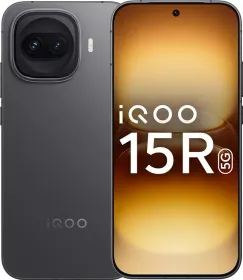
At around ₹40K, the phone gets the core experience right with reliable performance and standout battery life. The OnePlus 15R, realme GT 7, and Nothing Phone (4a) Pro bring a more polished software experience and better cameras, so they are worth considering if those matter more.
Overall, the POCO X8 Pro Max is a solid choice if performance and battery life are your top priorities.

Smartprix ⭐ Rating: 8.3/10
- Design and Build: 8.7/10
- Display: 8.8/10
- Speakers: 8.8/10
- Software: 7/10
- Haptics: 8/10
- Biometrics: 8.5/10
- Performance: 9/10
- Cameras: 7/10
- Battery Life & Charging: 9/10
First reviewed in March 2026.

You can follow Smartprix on Twitter, Facebook, Instagram, and Google News. Visit smartprix.com for the latest tech and auto news, reviews, and guides.